A Canadian training lineage dating back to 2006
The History of Seniors Real Estate Training in Canada
From Accredited Senior Agent™ to Lifestyle55+ Affiliate and MASTERS
Lifestyle55+ traces its training lineage to the Accredited Senior Agent™ program developed in Canada beginning in 2006, making it one of the country’s longest-running and most established seniors real estate training paths.
What began as specialized education for REALTORS® serving a growing mature and seniors market has evolved into a broader approach to professional practice, one that recognizes a later-life real estate transaction is rarely just about real estate.
The Beginning: A Canadian Seniors Real Estate Program
The story begins in 2006, when the Seniors Real Estate Specialist® program, SRES®, was exploring the Canadian market.
According to archival Accredited Senior Agent™ program records and the recollections of those involved in its early development, Canadian real estate educator Barry Lebow was approached about bringing the SRES® program into Canada. Rather than simply importing an American program, the decision was made to develop education specifically for the Canadian environment.
The Accredited Senior Agent™ (ASA™) program grew from that work.
Archival program material states that by early 2007 the ASA™ curriculum had been submitted to OREA and RECO for continuing-education consideration. Two courses formed the education: The Mature/Seniors Market – Tax Planning and Marketing and Your Future in the Underserved & Dynamic Mature/Senior Market. Together, they carried 11 continuing-education credits.
This was significant at a time when specialized seniors real estate education was still relatively new in Canada. The program was already asking REALTORS® to look beyond conventional listing presentations, sales techniques and transaction management.
Learning the Program From the Other Side of the Classroom
Paul Cutajar entered the ASA™ program as a REALTOR® after experiencing the illness and death of his father. The timing was personal. The subjects being discussed were no longer theoretical. They connected directly to the realities of aging, illness, family decisions, housing and loss.
Paul completed the two ASA™ continuing-education courses on February 23 and 24, 2011. His surviving certificates document 5 credits for Your Future in the Underserved & Dynamic Mature/Seniors Market and 6 credits for The Mature/Seniors Market – Tax Planning and Marketing.
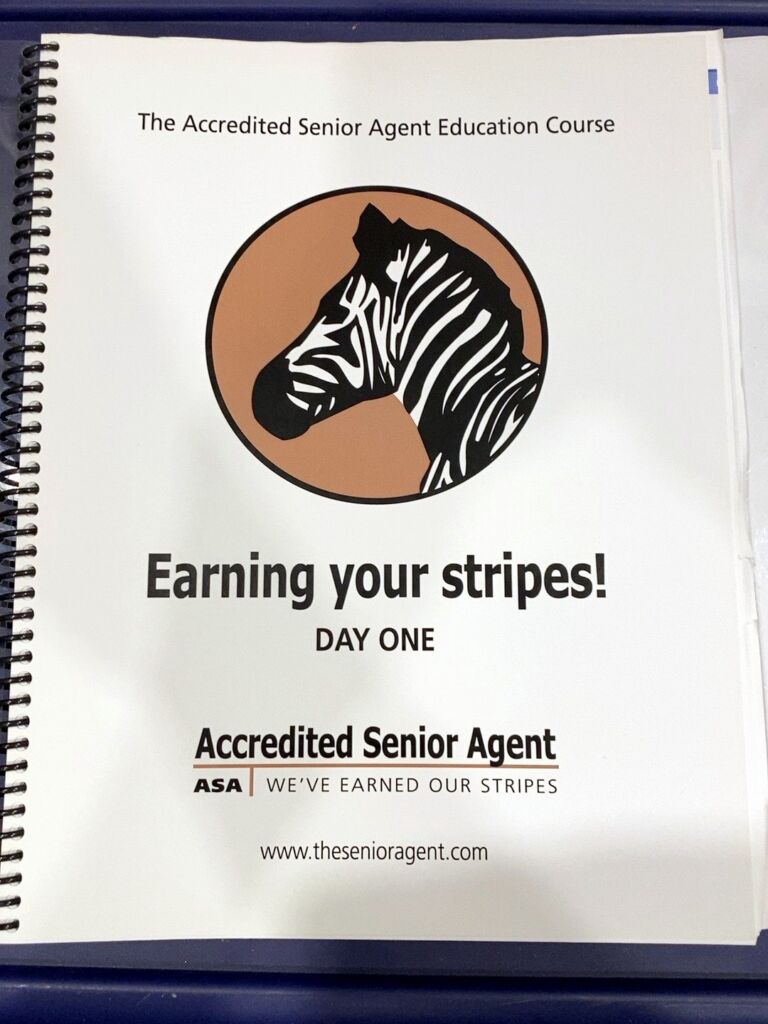
The original ASA™ education was delivered over two full classroom days and supported by dedicated manuals and training material created specifically around the mature and seniors market.
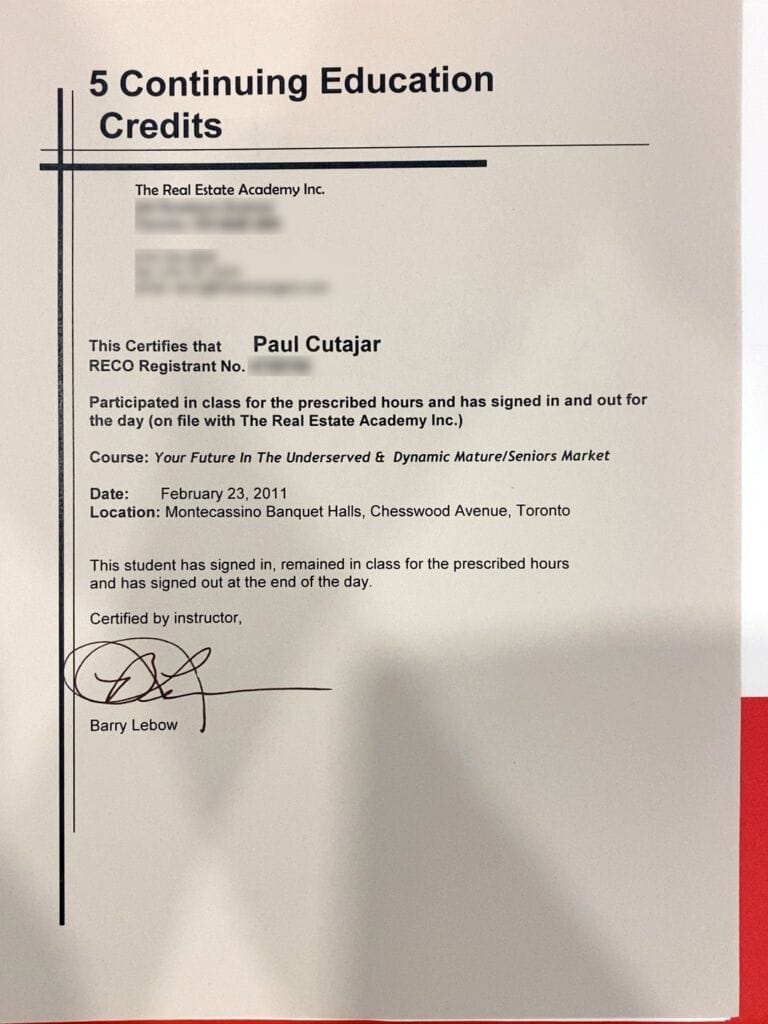
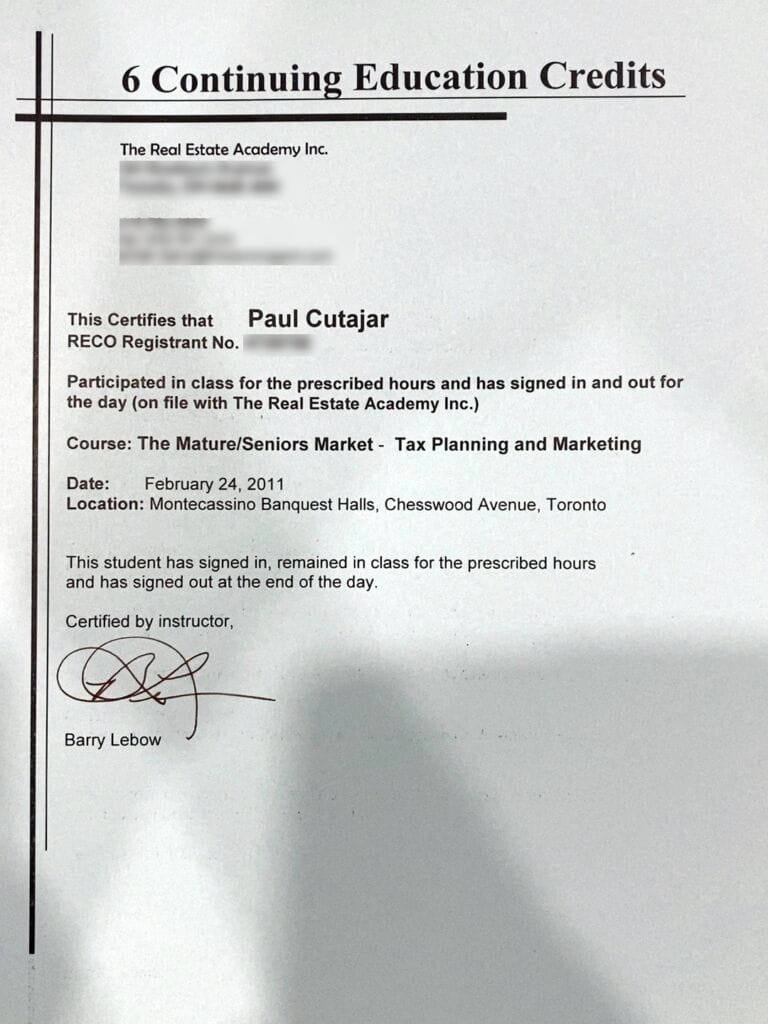
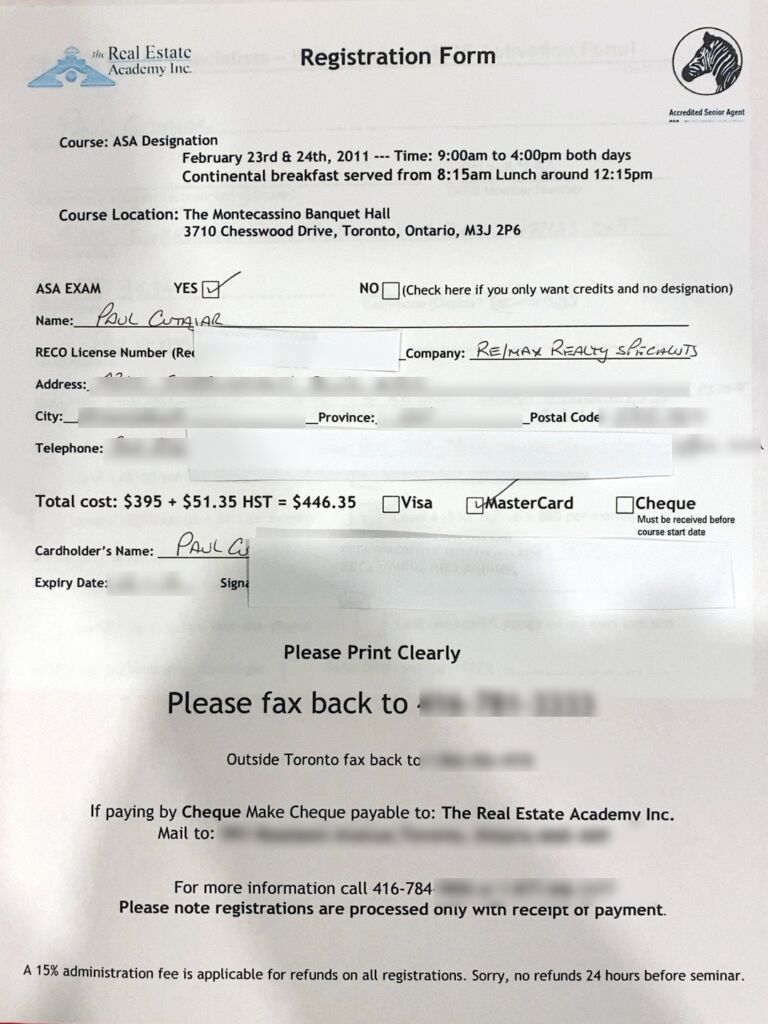
Archival course materials and surviving participant records help document the ASA™ training lineage.
From ASA™ to MASTER-ASA: When Taking the Course Was No Longer Enough
As the Accredited Senior Agent™ program grew, so did the number of REALTORS® carrying the ASA™ designation. More professionals learning about the seniors market was positive, but growth also created a challenge.
Completing a course did not necessarily mean every designation holder would apply the education in the same way, provide the same level of service or continue developing their understanding of older adults and their families.
In 2013, Paul reached out to Chris Newell, who was leading the ASA™ program at the time, and shared his concern. Paul had benefited from the original education and believed strongly in what it had introduced to Canadian real estate. His concern was what happened after the course.
As more REALTORS® earned the designation, how could those who genuinely wanted a deeper seniors practice continue to develop? More importantly, how could the program encourage a higher level of understanding and service rather than simply increasing the number of people entitled to display the designation?
Chris was wrestling with many of the same questions. Their discussions became part of the development and launch of MASTER-ASA, an advanced progression for ASA™ graduates who wanted more from both themselves and the program.
Paul became Canada’s first MASTER-ASA.
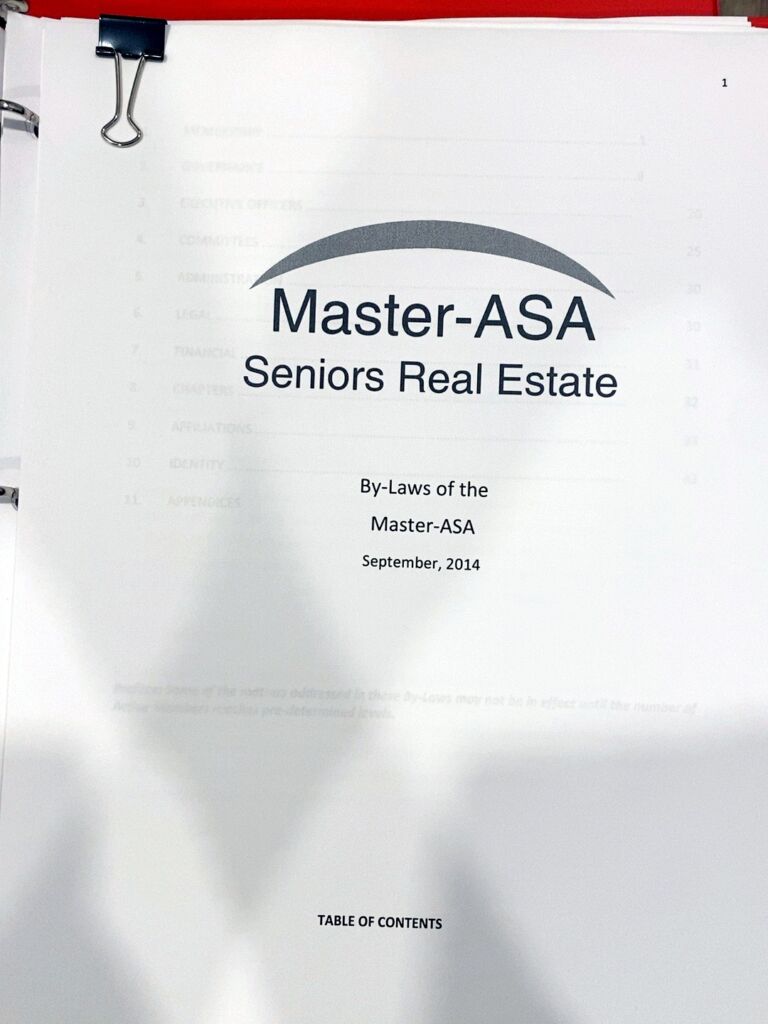
That distinction would eventually become central to the philosophy behind Lifestyle55+ Affiliate and particularly Lifestyle55+ MASTERS.
A New Chapter in 2017
In 2017, Paul Cutajar’s seniors-focused business acquired the Accredited Senior Agent™ program and its intellectual property, beginning the next stage in the program’s development.
The goal was not simply to keep an older designation alive. The opportunity was to take what had been learned through years of teaching, transactions, client experiences, professional relationships and changes within the seniors sector and determine what the next generation of education should look like.
Real estate may be the transaction, but it is not always the whole transition.
Why the Program Evolved Beyond “Seniors”
In 2022, the Accredited Senior Agent™ identity was retired and the education was redeveloped and reintroduced as the Lifestyle55+ Affiliate program, with the advanced training evolving into Lifestyle55+ MASTERS.
The change was more than a new name. The word “seniors” had become too narrow to describe the people involved.
A healthy 58-year-old planning the next twenty years of housing may not think of themselves as a senior. A 62-year-old daughter helping an 87-year-old parent navigate a move may be deeply involved in seniors housing and real estate without being the homeowner. An executor dealing with a property after a death may need professionals who understand estates, family dynamics and timing. A couple considering aging in place may need to understand housing, accessibility, care and finances long before there is a property to list.
The 55+ perspective recognizes that later-life decisions often involve several generations and several professions at the same time.


The 2022 rebrand established the Lifestyle55+ Affiliate and Lifestyle55+ MASTERS training path.
More Than Real Estate
Over the years, the training and the relationships surrounding it have included perspectives from real estate, financial services, estate and executor work, Certified Executor Advisors, retirement-home transitions, consulting, auctions, marketing, housing and service directories, senior-focused businesses and other professionals serving older adults and their families.
Those relationships matter because later-life decisions rarely arrive neatly packaged according to professional licence.
A REALTOR® may recognize that a client needs legal advice. A financial professional may identify a housing issue. An executor may need help understanding the practical steps involved in preparing and selling a property. A retirement residence may be helping a family make a decision before the family has even considered what will happen to the existing home.
Understanding where your own responsibility begins and ends, and knowing when another professional should become involved, is part of serving people properly. This is why Lifestyle55+ emphasizes working outside of your silo.
Transactional vs. Transitional™
A transaction asks what needs to happen to complete the real estate business. A transition asks what needs to happen for the person and family to move through the larger change appropriately.
More Than Just a™ REALTOR®
Real estate expertise remains essential when real estate is involved. But technical real estate competency may be only one part of what the person or family needs.
Why Lifestyle55+ No Longer Offers Continuing-Education Credits
Continuing-education approval was an important part of the original Accredited Senior Agent™ history. Lifestyle55+ Affiliate and MASTERS do not offer CE credits today.
That is intentional. The current programs are no longer designed around the requirements or boundaries of a real estate continuing-education credit system. Their roots remain firmly connected to real estate, but the curriculum is able to follow the realities that have emerged through years of working with older adults, families, transactions, professional relationships and senior-focused programs.
That independence allows discussions to move into areas such as aging, family dynamics, psychology, cognitive considerations, housing and care options, estates and executors, professional collaboration, marketing, communication and person-centred practice.
The purpose is not to teach another professional’s regulated role. It is to help participants recognize the broader circumstances surrounding the person they are serving, understand where their own responsibilities fit and know when another qualified professional belongs in the conversation.
Lifestyle55+ Is Not Trying to Train the Largest Number of People
There is a place for large-scale education. Lifestyle55+ has chosen a different direction.
We are less interested in how many people can complete a course than in what participants are prepared to do with what they learn. If thousands of professionals carry the same designation, simply displaying the designation cannot automatically make each one different.
The deeper question is whether the education changes the way the professional thinks, works, communicates and serves.
Lifestyle55+ Affiliate is the foundation. For those who want to take that learning further, Lifestyle55+ MASTERS asks a more demanding question:
Already Have SRES® or CCSR? Excellent. Don’t Stop There.
Lifestyle55+ does not need another credible seniors education program to be unsuccessful in order for ours to have value.
If you have earned SRES®, CREA’s Canadian Certified Seniors Representative (CCSR) or completed other seniors-focused education, that is a positive step. Keep learning.
The issue is not how many initials appear after your name. It is what those experiences have helped you understand and what becomes different in your professional practice as a result.
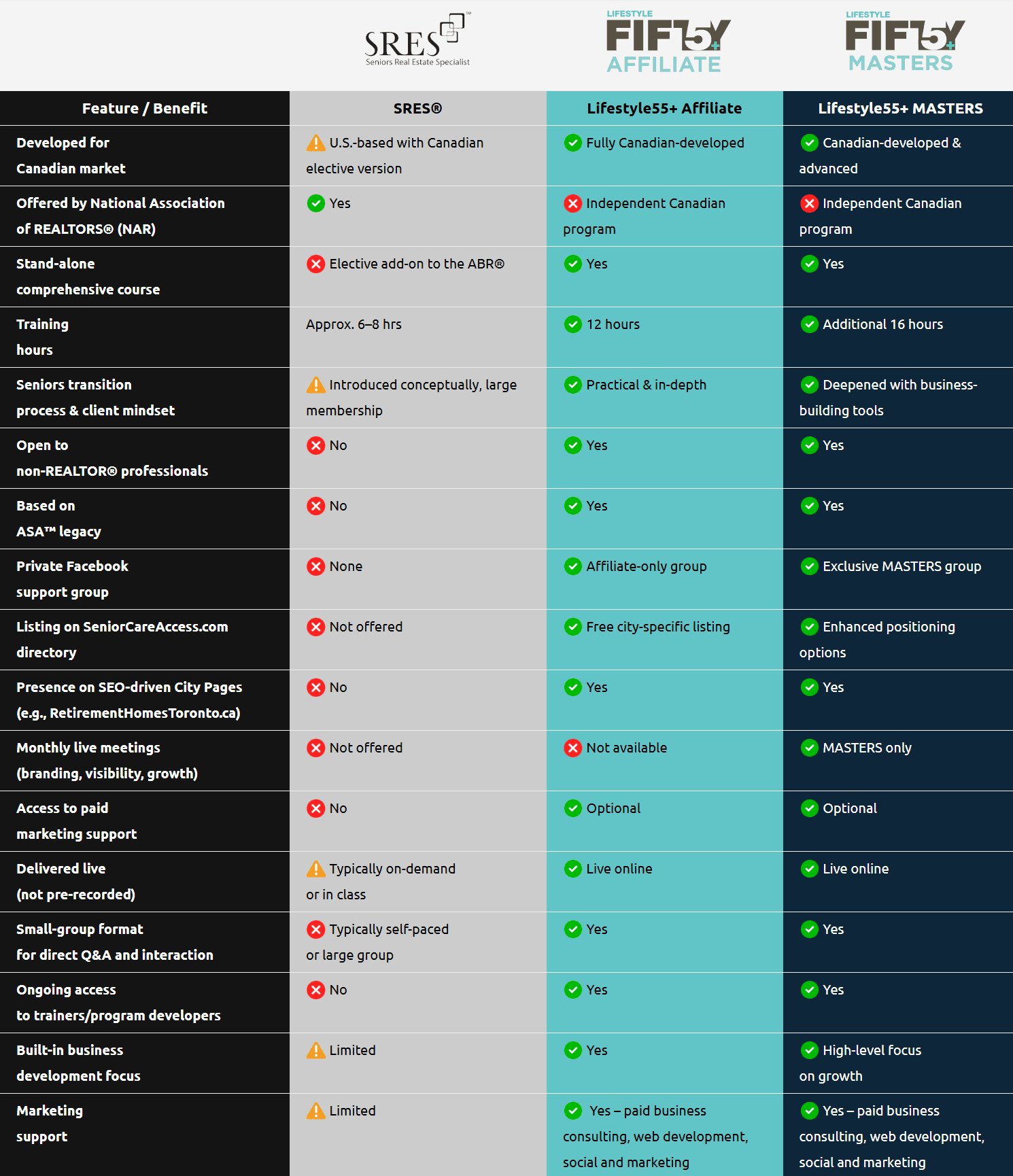
The Lifestyle55+ Affiliate program is designed for professionals who want Canadian, seniors-focused education, whether it is their first specialized course or an addition to previous training. It stands on its own alongside other seniors real estate education programs and is also the required prerequisite for Lifestyle55+ MASTERS. Other seniors credentials or designations do not replace the Affiliate requirement for entry into MASTERS.
If you want to know more, do more and BE MORE, the Lifestyle55+ Affiliate program may be the next place to challenge your thinking. For Affiliate graduates who want to go considerably deeper into professional practice, differentiation, accountability, person-centred service, referral relationships and implementation, Lifestyle55+ MASTERS represents the advanced progression.
Experience Behind the Work
The evolution of Lifestyle55+ reflects years of direct work in seniors real estate, professional education, later-life transitions and cross-professional collaboration.
Developer and instructor of the Lifestyle55+ Affiliate and MASTERS education programs.
National seniors housing and services information directory.
15 years in real estate, including specialized seniors real estate work.
Knowledge of executor responsibilities and estate-related transitions.
Part of the organization’s original development team.
Facilitating meaningful conversations about important family and later-life matters.
Helping people and organizations navigate later-life decisions, resources and service options.
Supporting organizations that serve older adults and their families.
Plus many other programs and initiatives, some retired and others still operational.
Interested in Collaboration or Program Development?
Lifestyle55+ has been shaped by years of Canadian seniors real estate education, curriculum development, professional practice and relationships across industries serving older adults.
We welcome conversations with associations, educators, companies, senior-serving organizations and industry partners interested in collaboration, curriculum development, instruction, licensing, research, professional education or other development opportunities.
If your organization is exploring how professionals can better understand and serve Canada’s growing 55+ population, we would be pleased to have the conversation.
Frequently Asked Questions
When did seniors real estate training begin in Canada?
Lifestyle55+ traces its educational lineage to the Accredited Senior Agent™ program, developed in Canada beginning in 2006. Archival ASA™ material records the Canadian curriculum being submitted for continuing-education consideration in early 2007.
Was the Accredited Senior Agent™ program a Canadian program?
Yes. ASA™ was developed for the Canadian market. Its history differs from the Seniors Real Estate Specialist® designation, which originates with the U.S.-based National Association of REALTORS®.
Did Accredited Senior Agent™ training offer continuing-education credits?
Yes. Surviving participant certificates document two ASA™ courses carrying a combined 11 continuing-education credits. Lifestyle55+ Affiliate and MASTERS do not offer CE credits today.
Is Lifestyle55+ Affiliate the same course as the old ASA™ program?
No. Lifestyle55+ Affiliate grew from the ASA™ educational lineage but has been substantially redeveloped to reflect changes in aging, housing, family involvement, professional collaboration and later-life transitions.
Why was Accredited Senior Agent™ changed to Lifestyle55+?
The 55+ identity better reflects the broader group involved in later-life decisions, including older adults, adult children, spouses, executors, caregivers and other professionals.
Is Lifestyle55+ only for REALTORS®?
No. Real estate remains the largest professional category and the program’s history comes from seniors real estate education, but Lifestyle55+ increasingly supports broader professional participation and cross-professional collaboration.
Does Lifestyle55+ replace SRES® or CREA’s CCSR?
No. Lifestyle55+ encourages continued professional education. SRES®, CCSR and Lifestyle55+ have different origins, formats and approaches. Professionals who already hold another seniors-focused credential are welcome to continue their education through Lifestyle55+.
What is the difference between Lifestyle55+ Affiliate and MASTERS?
Affiliate provides the Lifestyle55+ foundation. MASTERS is the advanced progression for Affiliate graduates who want to develop person-centred service, differentiation, accountability, professional relationships and implementation further.
Can organizations work with Lifestyle55+ on training or curriculum development?
Yes. Lifestyle55+ welcomes discussions regarding collaboration, instruction, curriculum development, licensing, professional education and related opportunities.