
Seniors Real Estate Is Never Just Real Estate
Canadian seniors training for professional services needs to reflect what really happens when families make later-life decisions. Housing is part of it. Care is part of it. Money is part of it. The part that quietly shapes everything is trust.
If you work in seniors real estate, or you support older adults through care, home services, finances, or retirement living, you have likely seen the same turning point. Someone says, “I am the Power of Attorney,” or “I am the executor,” or “My parent cannot manage this anymore.”
In that moment, the work gets serious. People are stressed. Time is tight. Family dynamics surface. Authority can be unclear. And the risk of costly mistakes rises fast.
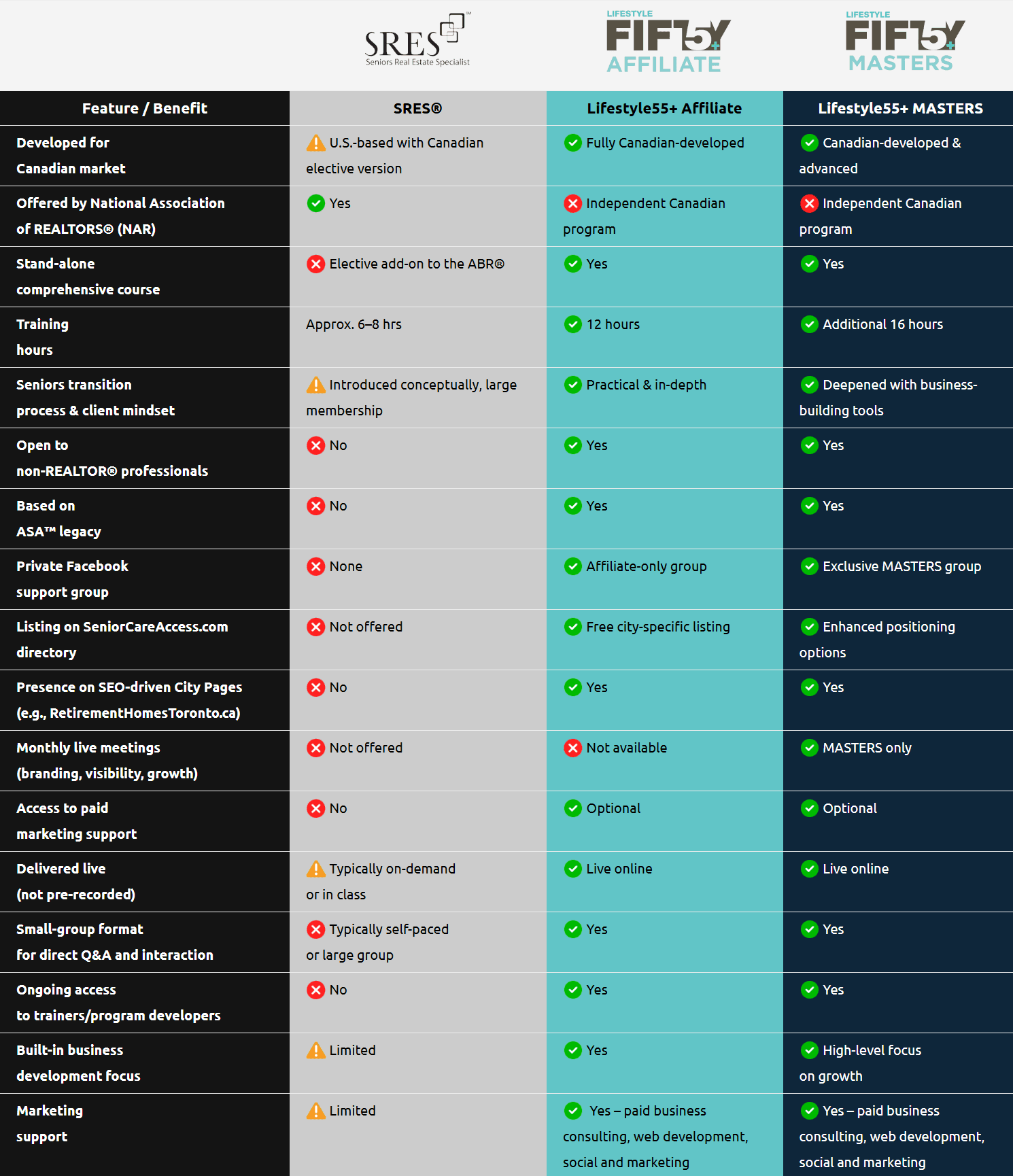
This is why Lifestyle55+ was built as Canadian seniors training for professional services. Seniors real estate professionals are a major part of the ecosystem, but senior transitions involve many roles. The goal is simple: prepare professionals to operate with clarity when trust, responsibility, and decision-making collide.
The circle around seniors includes more than one profession
Seniors real estate often sits at the centre of change. A move can trigger care decisions, financial decisions, and legal decisions. Most files include multiple professionals, plus family members who are trying to do the right thing.
That is why “training for seniors real estate” should not be limited to sales strategy or downsizing checklists. A truly useful program supports the wider circle of professionals who serve older adults and their families.
Why POA and executor situations show up so often
Power of Attorney and executor responsibilities are not rare in later-life work. They are common, especially during crisis moves, declining health, or estate situations.
These are situations you may recognize:
- A family member wants to sign “for dad,” but cannot confirm authority.
- Two siblings give different instructions and expect you to choose.
- A home sale is happening while health is changing and everyone is under pressure.
- An executor is coordinating a property decision while also grieving and juggling logistics.
These situations are not legal problems first. They are trust problems first. Trust problems are where delays, conflict, and expensive errors happen.
The gap: people get fiduciary titles, not fiduciary education
Many families step into POA or executor roles with limited practical guidance. When confusion shows up, they lean on the professionals around them. This is especially true in seniors real estate, where decisions involve property, timing, and documentation.
Even when you are not the fiduciary, your work depends on role clarity, proper documentation, ethical boundaries, and calm communication.
Why the Personal Fiduciary Certificate matters for professionals
As part of the Lifestyle55+ Affiliate course, members also receive access to the Personal Fiduciary Certificate (PFSI). The course focuses on ethics, ethical responsibilities, and the duty of care involved in acting in a position of trust, including POA, executor, and trustee responsibilities.
For professionals, this is not about “learning law.” It is about learning how fiduciary realities affect everyday decisions and conversations. It helps you operate with more confidence, better boundaries, and fewer avoidable mistakes.
For REALTORS and financial professionals who already carry fiduciary responsibilities in their own lane, this can elevate value and clarity in real-world senior files. For senior service providers, it supports better role clarity and communication when families are stressed and authority is unclear.
Learn more about PFSI here: thepfsi.com
Why the Certified Executor Advisor connection adds real-world relevance
Lifestyle55+ has also established a relationship with the team behind the Certified Executor Advisor Network through the Canadian Institute of Certified Executor Advisors. Paul is also a Certified Executor Advisor (CEA), which helps keep the training grounded in the practical reality executors face.
The CICEA describes CEAs as experts in their own field who also have broad practical knowledge of what an executor needs to know, and how to steer executors away from problems.
For professionals working in seniors real estate and senior services, this matters. Executors and POAs are often the decision-makers. Professionals who understand this reality serve families better and protect their own reputation.
Learn more about CICEA here: cicea.ca
This is senior-transition training, not a single-lane course
Lifestyle55+ is built as Canadian seniors training for professional services because senior transitions are rarely single-lane. Housing, care, finance, family dynamics, and decision authority intersect. Seniors real estate is often where these pressures show up first.
You do not need to be the fiduciary to benefit from fiduciary awareness. You just need to work in an environment where fiduciary decisions happen. In the seniors space, that is most of us.
Who this training is for
This program is designed for professionals who serve older adults and families, including:
- Seniors real estate professionals working with downsizers, estates, and later-life moves
- Financial professionals supporting older clients and family decision-makers
- Senior service providers supporting aging in place, transitions, or retirement living
- Professionals who routinely deal with POA, executors, estates, and authority questions
What changes when you get fiduciary-aware
You do not become “the POA person.” You become the professional who asks better questions early, documents properly, avoids assumptions, and keeps boundaries clear without sounding cold.
In seniors real estate and senior services, that kind of professionalism gets remembered. It also earns referrals. Other professionals trust you in delicate situations.
Next steps
If you are looking for Canadian seniors training for professional services that includes seniors real estate realities and fiduciary awareness, start here: